
Elias Young’s Blog
Most Recent
Most disappointing advisor relationships aren't about bad actors. They're about advisors who managed investments but never built an actual written plan. Here's how to tell the difference between the wrong advisor and simply the wrong fit.
Two portfolios can hold the same investments and still keep different amounts after taxes. The difference often comes down to asset location: which investments sit in your traditional, Roth, HSA, and taxable accounts. This piece walks through how each account type is taxed, the two lenses that guide placement decisions, and how to move an existing portfolio toward better location without triggering an avoidable tax bill along the way.
The S&P 500 closed the first half of 2026 up 10.21%, but the path was anything but smooth. A new Fed chair, an Iran war that pushed oil past $100, and growing scrutiny of AI earnings concentration all shaped the six months, and may shape the next. Here's a look back, plus the portfolio questions worth asking now.
"Just buy an S&P 500 fund and chill" or (VOO & Chill) is a popular strategy, but is it really just a concentrated bet on U.S. large-cap stocks? Here's what the lost decade, Japan's 34-year flat market, and decades of research on size and value suggest about using a single index for your entire portfolio.
You already know what you need to do with your money. Set up the account, look at the retirement contributions, make a plan. You've known for a while. This piece looks at why the gap between intention and action is so hard to close, what the research on financial procrastination and present bias actually says, and the one simple thing that tends to move people from "meaning to" into "done."
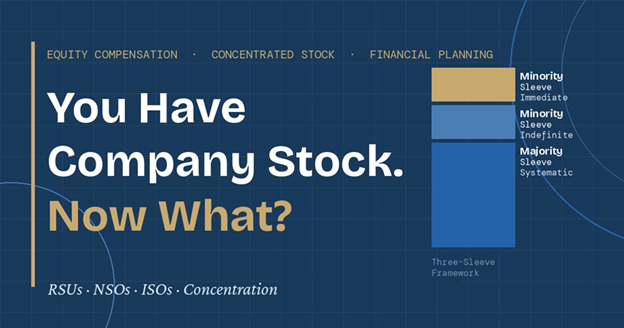
RSUs vesting every year, stock options you've been meaning to deal with, and a nagging sense you're overdue for a plan. The hard part usually isn't understanding the rules; it's follow-through, since there's always a reason to wait one more quarter. This piece covers how RSUs, NSOs, ISOs, and PSUs are taxed, why a concentrated position is riskier than it feels, and a three-sleeve framework for reducing it on a schedule you set in advance.
Ask people why they hired a financial advisor and almost none of them say "to beat the market." They say they wanted accountability, help making sense of complexity, or simply to stop spending their weekends on it. This piece walks through where research suggests professional management may add value over time, from cost-effective implementation and rebalancing to tax and withdrawal planning, and why the largest contribution tends to be keeping investors from costly decisions at market extremes.
You track your steps, hit the gym, and meal prep. Financial health rarely gets the same attention, even though money is the leading factor Americans point to when they talk about what's hurting their mental health. This piece reframes financial wellness as a form of wellness rather than a chore, walks through six areas it actually covers, and looks at what the research says about where guidance tends to help most.
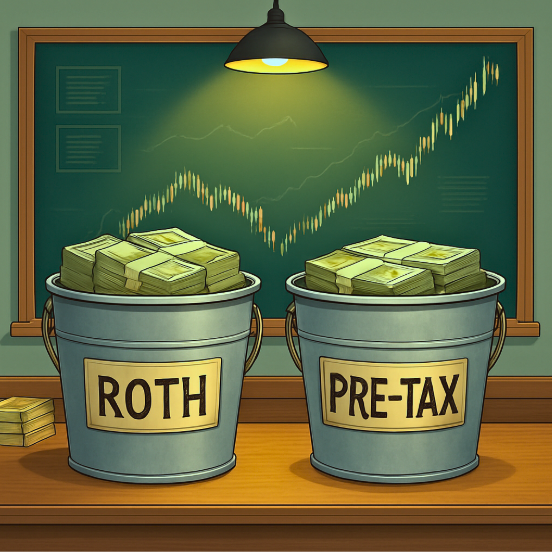
A Roth conversion is one of those moves that sounds technical but comes down to a simple idea: pay tax on retirement money when your rate is low instead of when it's high. This piece covers how conversions work, when to skip one (the timing traps that catch people are just as important), and a second strategy, the mega backdoor Roth, that lets high earners who've maxed their 401(k) set aside a large additional amount each year.
A few strong years in the market tend to leave portfolios holding more stock, and more risk, than their owners intended. The start of a new year is a natural time to check whether your allocation has drifted, whether your cash is doing its job, and whether you're taking full advantage of the 2026 contribution limits. This piece is a practical review across diversification, rebalancing, tax efficiency, and retirement savings by career stage.
A government shutdown delayed key data, rate expectations shifted, and headlines stayed loud, yet 2025 ended up a solid year for disciplined investors. The more interesting story was where the returns came from: international stocks outpaced the U.S. by a wide margin, and bonds posted their best year since 2020. This recap looks back at what happened and why staying diversified, rather than chasing last year's leader, tends to hold up.
California Public Employees & CalPERS
Planning around a CalPERS pension works differently than private-sector retirement. The CalPERS Financial Blueprint is a free seven-step guide for California public employees, covering how much you need to save, how to use Savings Plus, when to time your exit, and the pension elections you cannot undo. Download it and see where your plan stands.
A framework for the one CalPERS decision you can't take back, how to weigh the Unmodified Allowance against Options 1-4, and protect a survivor's income and health coverage.
One number in your CalPERS pension was set before your first day, and it's permanent. Here's how to tell which formula you have, and why it shapes when you retire.
Your retirement date sets several CalPERS numbers at once: service credit, your benefit factor, your first COLA, and your leave-payout taxes. They rarely point to the same day. Here's how to time it.
A lighter roundup for state employees curious about the small stuff beyond the pension and health plan. Here are the perks and discounts that kept coming up on r/CAStateWorkers, from travel and subscription deals to on-site amenities, plus how to confirm what actually applies to your department and bargaining unit.
If your CalPERS pension won't fully fund the retirement you're picturing, Savings Plus (or the CalPERS 457 Plan) gives you two ways to save more: a 401(k) and a 457(b). Here's why funding the 457(b) first tends to make sense for most participants who aren't maxing out both, and the cases where it doesn't.
You've left your CalPERS-covered job before retirement, and now your benefits are in question. This plain-language guide walks through vesting, your three options at separation (leave contributions on account, take a refund or rollover, or retire now), and how reciprocity works if you're heading to another California public employer.
A CSEA survey of nearly 5,000 California state employees found that 86% handle their own financial and retirement planning, relying on friends, family, and online resources. Here's the confidence gap between DIY planners and those who work with an advisor, and the CalPERS-specific decisions (pension timing, Savings Plus, Social Security, and tax planning) where going it alone may cost you.